About GLEN

What is the GLEN-Study?

The acronym GLEN stands for 'German Longitudinal Environmental Study'. Therefore, GLEN is a long-term, nationwide environmental study. As part of this scientific project, people from all over Germany are surveyed several times a year on various environmental topics. The resulting data provides a clear picture of trends in public opinion and behaviour, offering insight into society’s attitudes towards environmental issues.

What is GLEN all about?

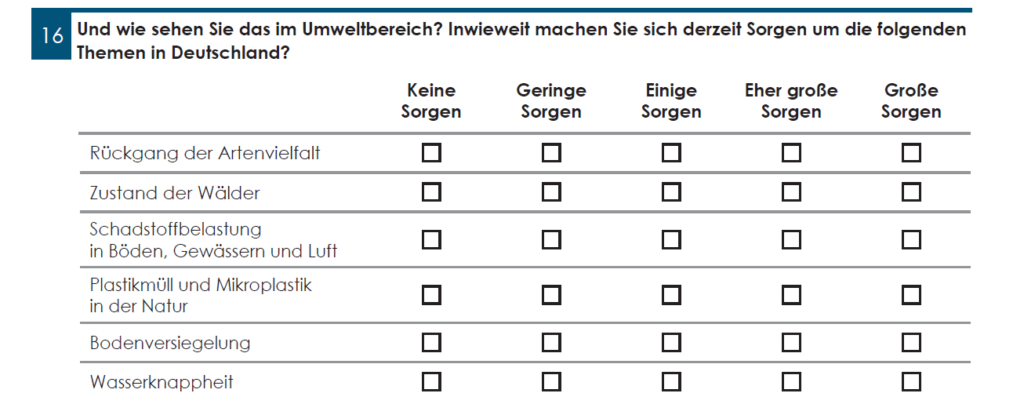
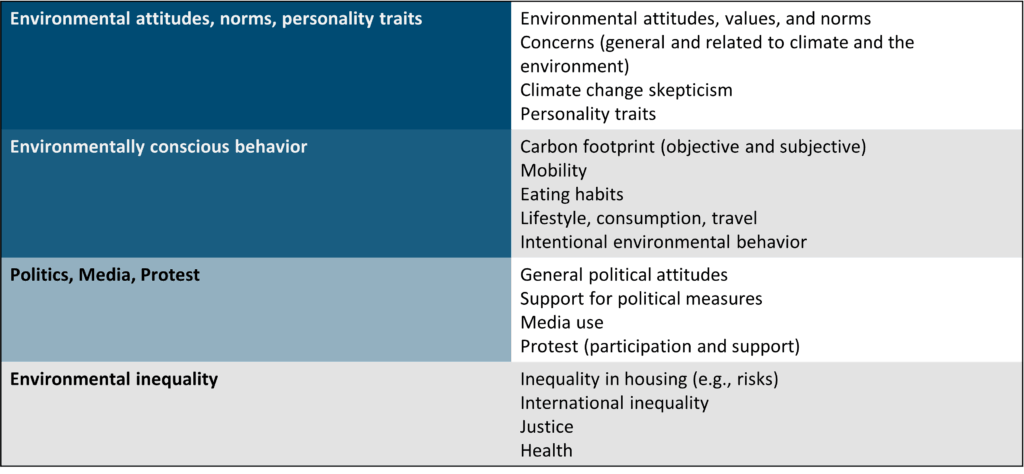
GLEN focuses on environmental issues. This includes respondents’ views on environmental policies such as renewable energy, carbon taxes and the transition away from traditional combustion engines. However, we also survey environmentally related behaviours directly, such as people's eating habits, how they get around, and the products they buy. Furthermore, the survey covers general opinions and attitudes towards environmental issues, such as knowledge of or scepticism towards theories on climate change.

In addition to demographic data such as age, gender and level of education, we also ask people about their living conditions. This includes questions about their leisure activities, family and social circles, how they use the media and their level of life satisfaction. Our aim is to gain a better understanding of the relationship between these factors and different opinions and behaviours regarding environmental issues.
How does GLEN work?

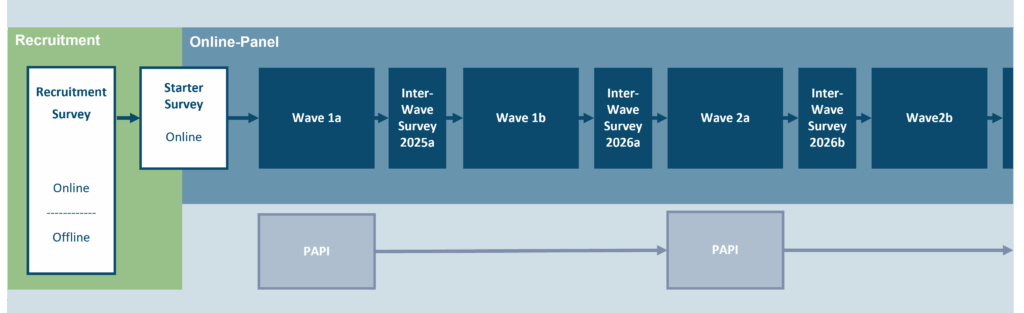
The GLEN study was launched in November 2024. At that time, 80,000 adults from across Germany were invited to participate in the survey by mail. The addresses were provided by the respective local registration offices. Around 31,000 people took part in the initial survey.

Participants in the survey were given the option of agreeing to be contacted again. 25,000 of those surveyed opted in. This group was subsequently invited to participate in a second survey in early 2025. The GLEN study is designed to run for 12 years. This will enable researchers to observe changes in attitudes and trends in Germany over a longer period of time.

What do the surveys look like?

Most of our surveys are conducted online. Respondents can complete them on their own using a computer or smartphone. We also invite people who are unable or unwilling to participate digitally once a year. These people are given the opportunity to fill out a paper questionnaire and post it back to us. After each survey, all participants receive a small monetary thank-you gift.

Any Questions?